
End-of-Life Assessment for Mobile Mining Equipment: From Design Life to Optimal Replacement
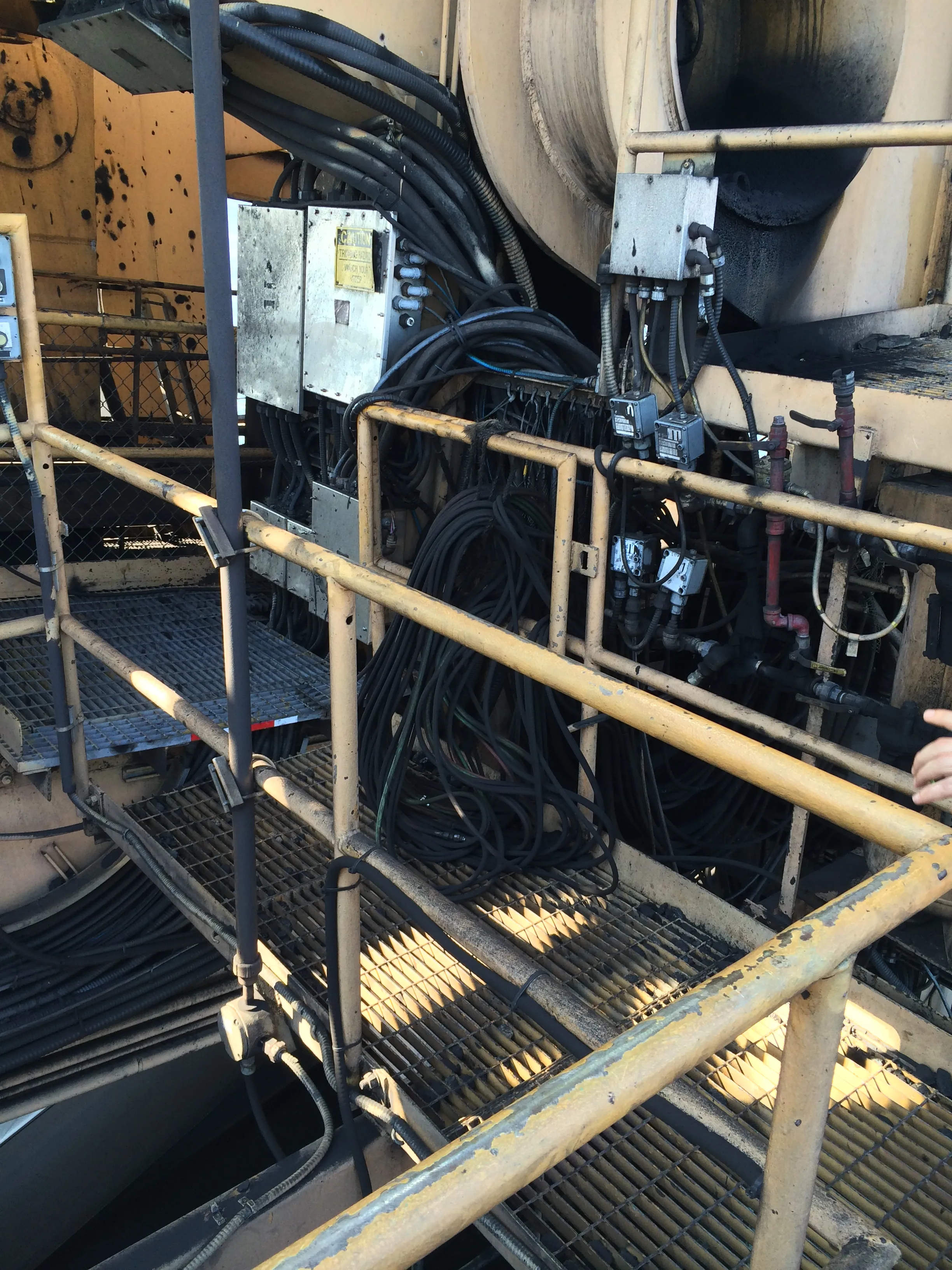
Large mobile mining machines — bucket wheel reclaimers, stackers, shiploaders, excavators — are designed for a finite operational life. The purchaser specifies the required design life — typically 25 to 30 years — along with target throughput rates, assumed duty cycles, and loading conditions. Actual operating conditions often vary significantly from the original design assumptions. In some cases, the original design itself may not have been adequate for the specified design life. When a machine approaches or exceeds that horizon, operators face a decision with tens of millions of dollars at stake: replace the asset, undertake a major refurbishment, or continue operating with escalating maintenance.
An end-of-life assessment provides the engineering and economic evidence to make that decision with confidence. It is not a routine structural inspection or a compliance check — it is a comprehensive, multi-disciplinary analysis that integrates operational data, structural evaluation, fatigue life prediction, and economic modelling into a single framework. The result is a clear, quantified answer to the question: what is the optimal strategy for this machine over its remaining operational horizon?
Understanding Design Life Assumptions
The finite-life design philosophy underpinning AS 4324.1 requires the designer to assume a specific number of operating cycles, a design throughput rate, and a set of load combinations that represent the machine’s expected duty over its service life. These assumptions are necessarily conservative at the design stage — the designer cannot know exactly how the machine will be operated, so margins are built into both the loading and the structural resistance.
Over 20 or more years of operation, the gap between those original design assumptions and the machine’s actual service history can become significant. Throughput may have increased beyond the original specification, operating practices may have changed, and the machine may have been modified or repaired in ways that alter its structural behaviour. This divergence between assumed and actual duty is the starting point for any credible end-of-life assessment — and it is the reason that simply comparing the machine’s age to its design life is an unreliable basis for replacement decisions.
Characterising Real Operating Conditions
The foundation of any credible end-of-life assessment is replacing design assumptions with measured reality. Modern mobile mining machines generate vast quantities of operational data through SCADA systems, PLC historians, drive logs, and weighing systems. The challenge lies in extracting meaningful load characterisation from this raw data — converting millions of data points into a refined load spectrum that accurately represents how the machine has actually been used.
Igneum’s FleetBulk™ platform was purpose-built for this task. FleetBulk™ ingests raw operational data from multiple sources and produces a comprehensive characterisation of the machine’s actual loading environment. Key outputs include throughput distributions showing how production rates vary across operating periods, slew and travel cycle counts that quantify the number and severity of loading cycles the structure has experienced, digging resistance spectra that capture the forces imposed on the boom and bucket wheel during reclaiming, inertial loads from acceleration and deceleration events, and speed exceedance records that identify when the machine has operated beyond its rated limits.
The result is a refined load spectrum that represents the machine’s actual operational history and can be projected forward under multiple future production scenarios. This data-driven approach fundamentally changes the quality of every downstream analysis — the structural assessment, fatigue prediction, and economic model all become anchored to measured conditions rather than decades-old assumptions.
Structural Compliance Assessment
With the actual loading environment established, the next step is to re-assess the machine’s structural adequacy against current standards. A full finite element analysis is performed across the entire machine structure — long travel, portal, slew deck, booms, rocker, and counterweight — under revised load combinations that reflect the measured operating conditions.
Both strength and buckling analyses are conducted in accordance with AS 4324.1 and AS 4100. Standards evolve over time, and machines designed decades ago may not meet current code requirements even under their original design loads. When assessed against revised loads derived from actual operating data, additional non-compliances may emerge. These are ranked by severity and type — some may require immediate remediation, others may be acceptable with operational restrictions or monitoring, and all feed into the economic model as inputs to the ongoing maintenance cost trajectory.
Fatigue Life Prediction — Getting the Curves Right
Fatigue life prediction is the technical centrepiece of an end-of-life assessment. The quality of the fatigue analysis determines the credibility of the remaining life estimate, and two factors are commonly misunderstood or misapplied: the choice of S-N curve and the treatment of field repairs.
Why Design Fatigue Curves Are Wrong for Prediction
The S-N curves published in AS 4100 are design curves — they represent a lower-bound fatigue resistance corresponding to approximately 97.7% survival probability (mean minus two standard deviations). This level of conservatism is entirely appropriate for design, where the objective is to ensure that the vast majority of fabricated details will survive their intended service life.
However, when the objective shifts from design to prediction — estimating when fatigue cracks will actually initiate in a specific machine — these design curves systematically underestimate the remaining life. For prediction purposes, industry best practice is to use mean S-N curves such as those published in BS 7608, which represent a 50% probability of survival. These mean curves reflect the most likely time to crack initiation, rather than the conservative lower bound used for design.
The difference is not academic. Depending on the detail category and applied stress range, the shift from a design curve to a mean curve can move the predicted crack initiation point by several years. When that prediction feeds into an economic model comparing replacement strategies, the impact on the optimal decision can be significant.
The Effect of Field Repairs on Fatigue Performance
Over decades of service, critical structural details on mobile mining machines accumulate fatigue damage and develop cracks that are detected during routine shutdowns and repaired in the field. These field repairs, while necessary to keep the machine operational, introduce fatigue details of lower quality than the original manufactured connections.
The reasons are practical: field repairs are often performed with single-sided access, under time pressure, in environmental conditions that are far from the controlled workshop environment of original fabrication. Repeated thermal cycles from welding can degrade the heat-affected zone of parent material. The resulting weld geometry, residual stress state, and potential defect population are typically worse than the original detail.
A credible end-of-life assessment must account for this degradation by reclassifying repaired locations to a lower fatigue detail category — often one or more classes below the original classification. Under the same loading, a repaired detail will develop cracks sooner than the original connection. Ignoring this effect leads to optimistic remaining life predictions that understate the true maintenance burden in later years.
The Maintenance Cost Trajectory
A common misconception is that a machine “fails” when it reaches the end of its design life. In reality, fatigue is a progressive process — cracks initiate, are detected during scheduled inspections, and are repaired. The machine continues operating. What changes over time is not whether the machine can operate, but the cost of keeping it operational.
Maintenance cost follows a characteristic trajectory through a machine’s life:
- Early years: A baseline rate of cracking driven by design and fabrication defects at the most highly stressed details. Repair costs are relatively low and predictable.
- Mid-life plateau: Routine maintenance continues. Fatigue damage is accumulating across the structure, but widespread crack initiation has not yet occurred. Costs remain relatively stable.
- Late life: Widespread crack initiation begins as cumulative damage exceeds the fatigue resistance at an increasing number of details. The number of repairs per shutdown increases, repair scope grows, and shutdown intervals shorten. Costs accelerate sharply.
The critical insight that drives end-of-life economics is that the direct cost of welding repairs is typically a small fraction of the total cost. The dominant cost driver is lost production during extended shutdowns. As the required repair scope grows, shutdowns take longer, and the production loss associated with each shutdown increases disproportionately. When the required repair scope exceeds the available shutdown window, operators face a choice between deferring known repairs (accepting increased risk) or extending the shutdown (accepting additional production loss). Neither option is desirable, and both become more frequent as the machine ages.
Economic Operating Life Modelling
Total Cost of Ownership Framework
The structural and fatigue analyses produce technical outputs — non-compliance registers, remaining life estimates, projected repair schedules. The economic model translates these technical outputs into financial terms that support capital decision-making.
Three cost streams are modelled and compared across alternative strategies:
- Ongoing maintenance costs — the escalating direct and indirect costs of keeping the existing machine operational, derived from the fatigue life prediction and maintenance cost trajectory.
- Production loss — the value of lost production during maintenance shutdowns, which becomes the dominant cost component in late life as shutdown scope and frequency increase.
- Capital expenditure — the cost of replacement or major refurbishment, including procurement, fabrication, delivery, and commissioning.
By modelling these cost streams over the remaining planning horizon, the total cost of ownership for each strategy can be compared on a like-for-like basis.
Identifying the Optimal Replacement Point
The relationship between continued operation and replacement follows a predictable pattern. Continued operation starts with low incremental costs that accelerate over time as the machine ages. Replacement involves a large upfront capital outlay followed by a return to low maintenance costs.
The optimal replacement point — the timing that minimises total cost of ownership over the planning horizon — depends on both the machine’s condition and the remaining mine life:
- Mine closure scenario: When the mine has a defined closure date within a reasonable planning horizon, continued operation of the existing machine is often the most economic strategy, even with escalating maintenance costs. The capital outlay for a replacement machine cannot be recovered over a short remaining operational period.
- Long mine life scenario: When the operation has a long remaining life, early replacement often delivers a lower total cost of ownership. The ongoing escalation of maintenance and production loss costs on the ageing machine exceeds the annualised cost of replacement sooner than operators typically expect.
The economic model quantifies this trade-off with sensitivity analysis across key variables — production rates, commodity prices, maintenance cost escalation rates, and discount rates — so that decision-makers can understand how robust the recommended strategy is to changes in assumptions.
Assessment Outcomes and Benefits
What the Assessment Delivers
A comprehensive end-of-life assessment produces a suite of deliverables that together provide the complete evidence base for the replacement decision:
- Operational data analysis report — a detailed characterisation of the machine’s actual loading environment, including identification of speed exceedances and other operational risks not visible through conventional monitoring.
- Structural compliance register — FEA-based assessment of the full machine structure against current standards, with non-compliances ranked by severity and remediation cost.
- Fatigue life map — detail-by-detail remaining life estimates under multiple production scenarios, using mean S-N curves and accounting for the reduced fatigue performance of field repairs.
- Economic model — total cost of ownership comparison across strategies (continue, replace, refurbish), with sensitivity analysis on key input variables.
- Recommended strategy — a clear recommendation supported by engineering evidence and economic analysis, presented in a format accessible to both technical and commercial stakeholders.
How Operators Use the Results
Beyond the headline replacement decision, the assessment outputs support operational decision-making across multiple functions:
- Shutdown planning — the fatigue life map allows maintenance teams to forecast the scope and duration of repair work months or years ahead, enabling more efficient shutdown scheduling.
- OPEX budgeting — data-driven maintenance cost forecasts replace the rough estimates and historical extrapolations that typically underpin maintenance budgets for ageing equipment.
- CAPEX planning — the economic model provides a rigorous evidence base for capital expenditure requests, whether for replacement, refurbishment, or targeted upgrades.
- Risk management — the quantified risk profile supports governance and regulatory compliance, demonstrating that the operator has a credible basis for continued operation beyond the original design life.
- Procurement — early visibility of future maintenance requirements enables proactive ordering of long-lead-time structural spares and consumables.
Conclusion
End-of-life assessment transforms the replacement decision for ageing mobile mining equipment from guesswork into evidence-based engineering and economic analysis. The key elements — measured operational data over design assumptions, correct fatigue curves for prediction rather than design, proper accounting for the reduced fatigue performance of field repairs, and integration of technical results into an economic framework — combine to give operators a clear, defensible basis for one of the most significant capital decisions in their asset management program.
Machines can and do operate safely beyond their original design life. But there is always an optimal point — a time at which the total cost of continued operation exceeds the cost of replacement. Identifying that point accurately, and with sufficient lead time to act on it, is what a rigorous end-of-life assessment delivers.
At Igneum, we combine our FleetBulk™ operational data platform with deep structural and fatigue engineering expertise to deliver end-of-life assessments that our clients can act on with confidence.
Ready to discuss your next project?
Whether you need a full engineering assessment, specialist analysis, or an independent technical review — we're here to help. Get in touch to discuss how Igneum can support your operation.